About Depot Rato
Depot Rato
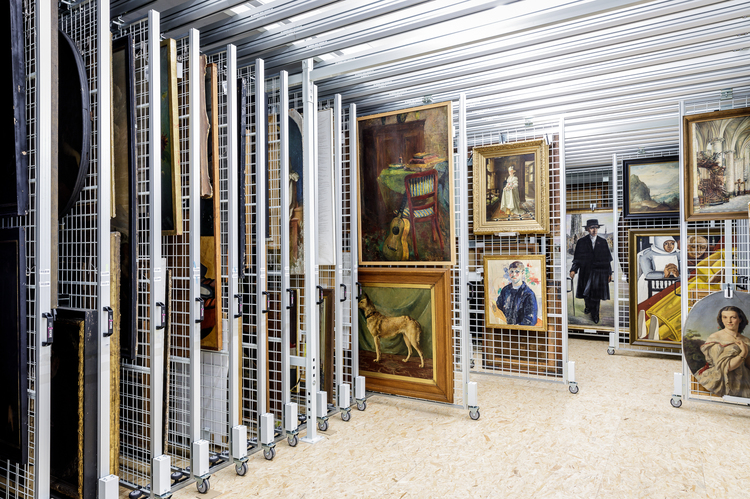
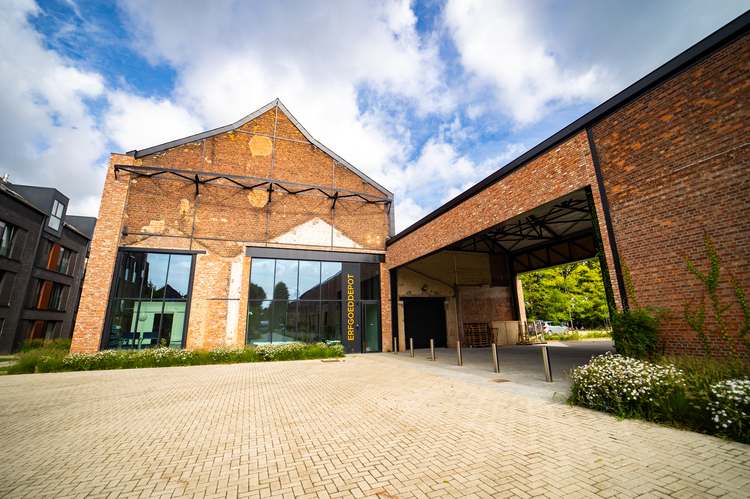
Depot Rato is housed in two beautifully restored warehouses that used to belong to the Société Rateau. Whereas, until quite recently, impressive steam turbines, pumps and fans rolled off the production line, these days countless artworks, books and archaeological finds are preserved is a sustainable and high-quality manner. Here, you will learn more about the transformation of this former industrial site.
From Rateau to Rato
In 1911, French engineer Auguste Rateau had a factory built next to the newly constructed Mechelen-Leuven railway line. To begin with, the production workshop focused on the manufacture of pumps. After the First World War, the damaged factory was rebuilt, and Société Rateau switched to producing compressors, fans and turbines for ships.
During the Second World War, the German army used the factory to produce turbines for their U-boats. In response, the Belgian Partisan Army decided to destroy several of the installations. Not long after, an Allied air raid caused even more severe damage to the factory buildings.
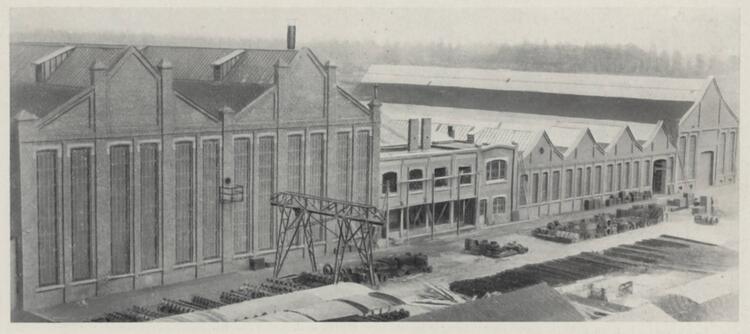
After the war, the factory was again rebuilt and Société Rateau played a key role in Belgium's major industrial developments. Until its closure in 2014, the site was used for the construction and maintenance of railway wagons, turbines and pumps. In this way the company contributed to the expansion of the chemical industry and modernisation of the waterways, and even supplied the pump installations for the Doel and Tihange nuclear power plants.
In 2016 the city of Mechelen purchased two of the old warehouses to renovate and re-purpose as a high-quality and sustainable heritage depot. The name Depot Rato, a reference to the former owner of these impressive factory halls, honours this remarkable piece of industrial heritage. The surrounding neighbourhood has also undergone a transformation, with a supermarket and a new residential area now occupying the old factory site.
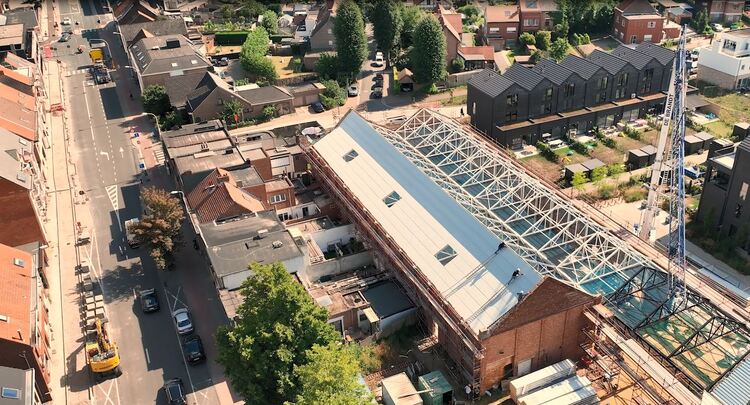
From industrial factory to innovative heritage depot
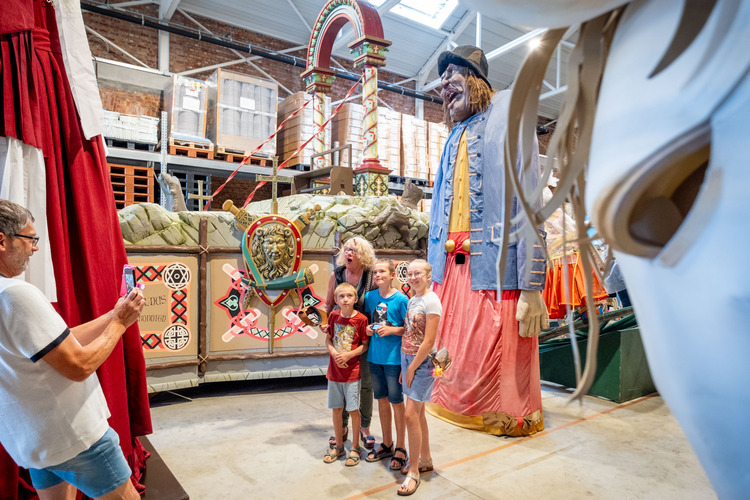
The new heritage depot is made up of two warehouses connected by a covered way. The first warehouse holds the depot staff's offices, a meeting room and processing areas, as well as the library box. It is also home to some of the largest heritage pieces, including the giant figures and parade floats for the Ommegang (Circumnambulation) procession.
The second warehouse contains eight large storage units in which the most fragile artefacts are kept. These collection pieces must be stored under optimal conditions: temperature and humidity can change only gradually. Instead of an energy-intensive climate control system, an ecological alternative was chosen. The storage units are made from a hemp-lime concrete, an innovative and highly sustainable material that combines excellent thermal insulation with effective moisture regulation. This automatically creates an ecological and stable indoor climate.